
Updated: March 23, 2026
Minnesota Northern Lights Guide
Minnesota Northern Lights Viewing Near Voyageurs National Park
Use this Minnesota Northern Lights guide to plan the best time and place to see the aurora in northern Minnesota near Lake Kabetogama and Voyageurs National Park. Guests staying at The Pines can use local sky conditions, dark surroundings, and seasonal timing to improve their chances of seeing the lights.
Minnesota northern lights viewing is never guaranteed, but clear nights, strong solar activity, and a dark northern horizon can create memorable viewing opportunities. Lake Kabetogama is one of the better places in northern Minnesota to watch for the aurora away from larger city light pollution.
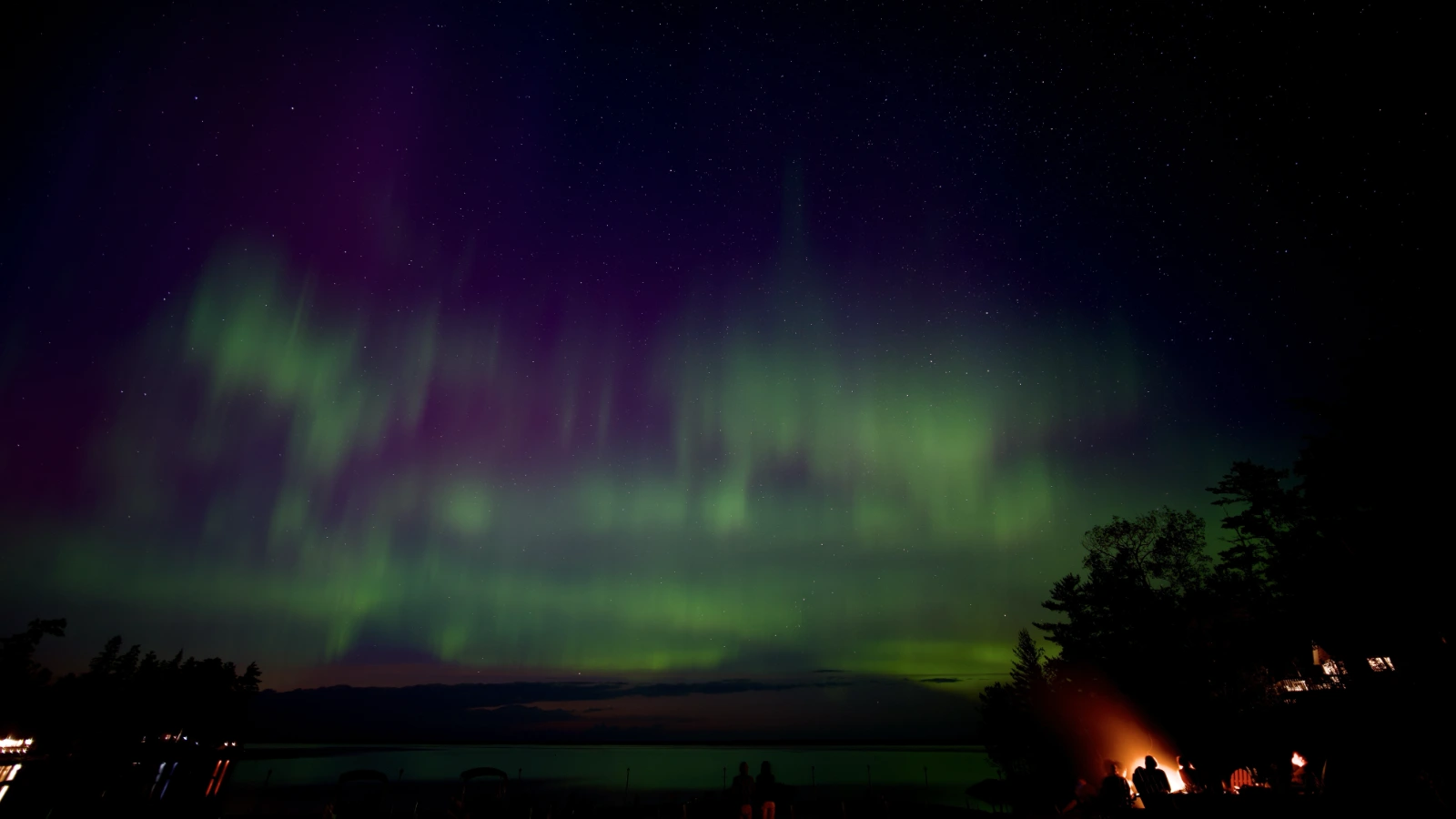
Visitors searching for the Minnesota northern lights usually want practical advice, not hype. This page focuses on where to watch, when conditions are strongest, how to interpret the forecast, and why staying near Voyageurs National Park gives you a real advantage when the sky cooperates. Selected as one of the 10 best Northern Lights hotels in the US, there is no better lodging than The Pines of Kabetogama to experience them.
Where to Watch Near Lake Kabetogama
The best viewing spots near The Pines are places with a wide northern horizon, minimal nearby lighting, and enough open sky that you can notice faint movement before the aurora intensifies. If staff at The Pines identify that the Northern Lights are observable with the naked-eye we will send out a text message to all guests on property, notifying them that “The best place to view is from the lawn by the marina.” The Pines lawn by the marina is the perfect vantage point as it is facing north over Lake Kabetogama in a bay that opens up the view and helps reduce visual clutter from trees and structures.
If you are staying on the property, give your eyes time to adjust, avoid bright flashlights, and step away from any direct exterior lights before deciding the sky is empty. A faint aurora can first look like pale haze or a low gray band before the color becomes obvious.
Why Voyageurs and Kabetogama Work So Well for Aurora Viewing
Voyageurs National Park is known for dark skies, low surrounding light pollution, and a northern Minnesota location that gives the aurora a better chance of becoming visible than it would farther south. That does not make every night a northern lights night, but it does make this part of the state one of the more practical places to watch when solar activity lines up with clear weather.
The Pines adds an extra advantage because guests are already close to the shoreline and do not need to leave the area to find darker, north-facing views. When the aurora is active, the reflection over the lake can make the experience even more memorable.
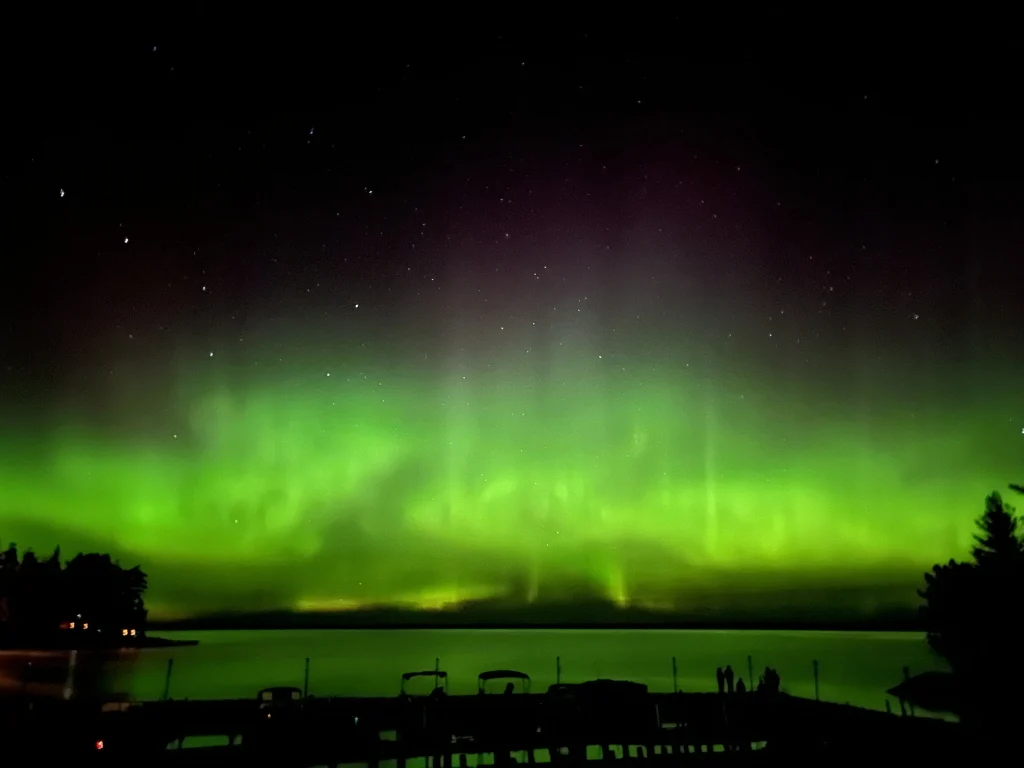
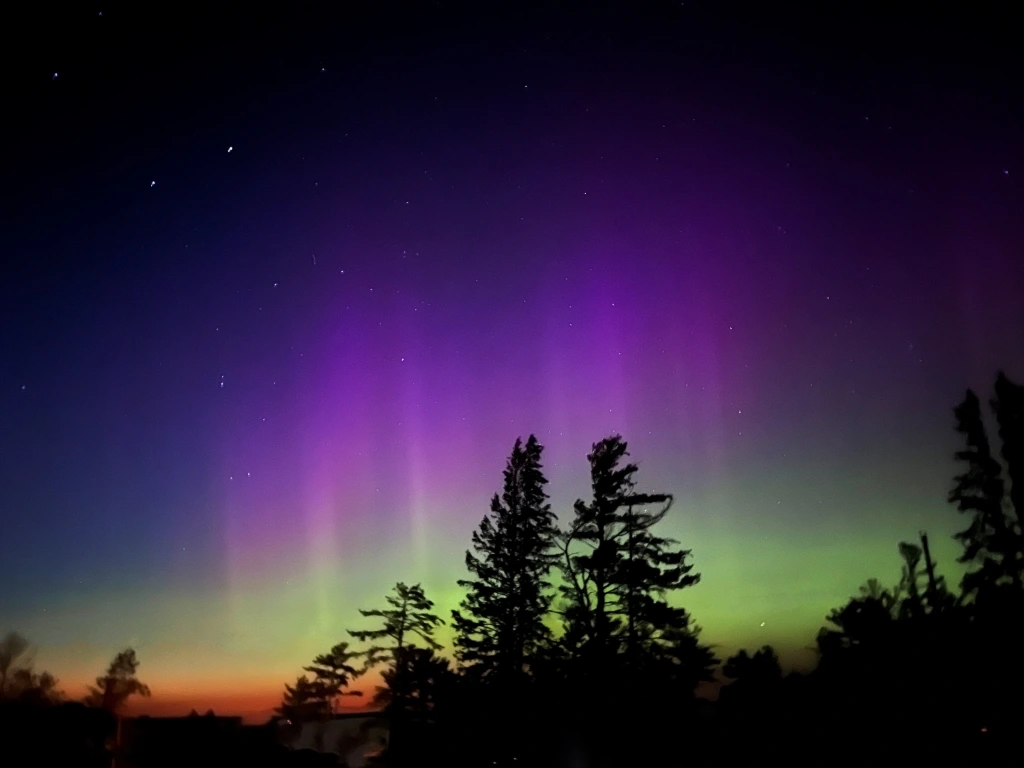
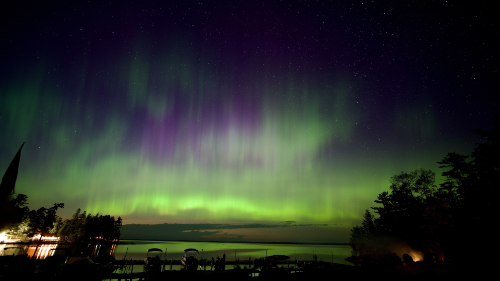
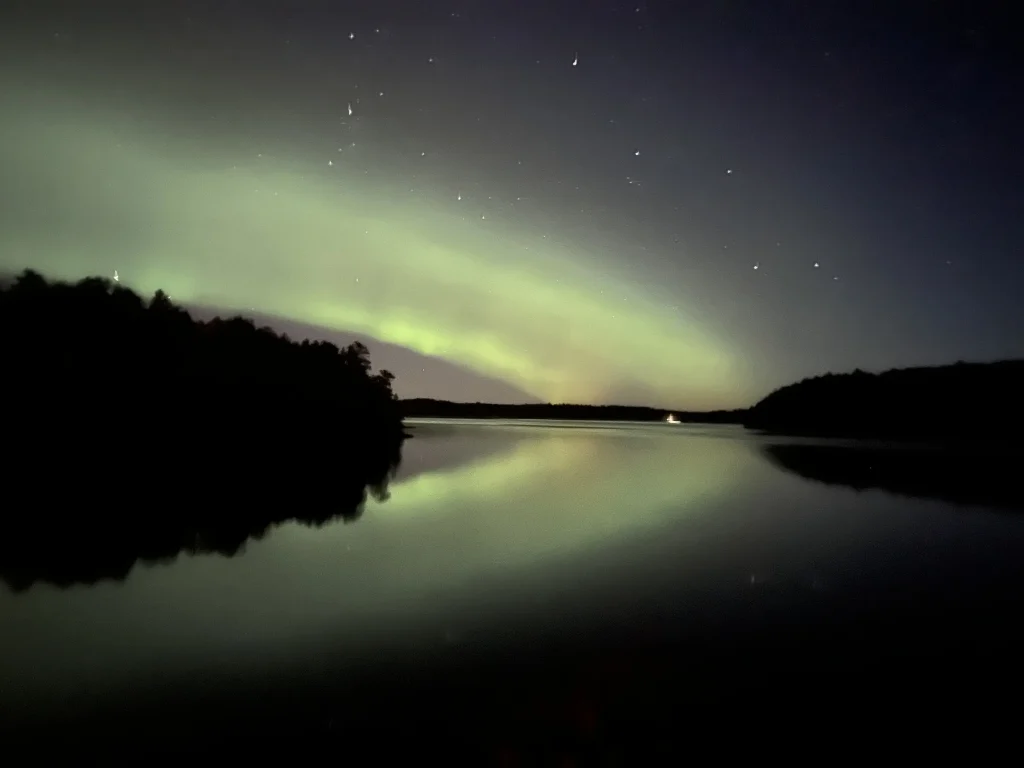
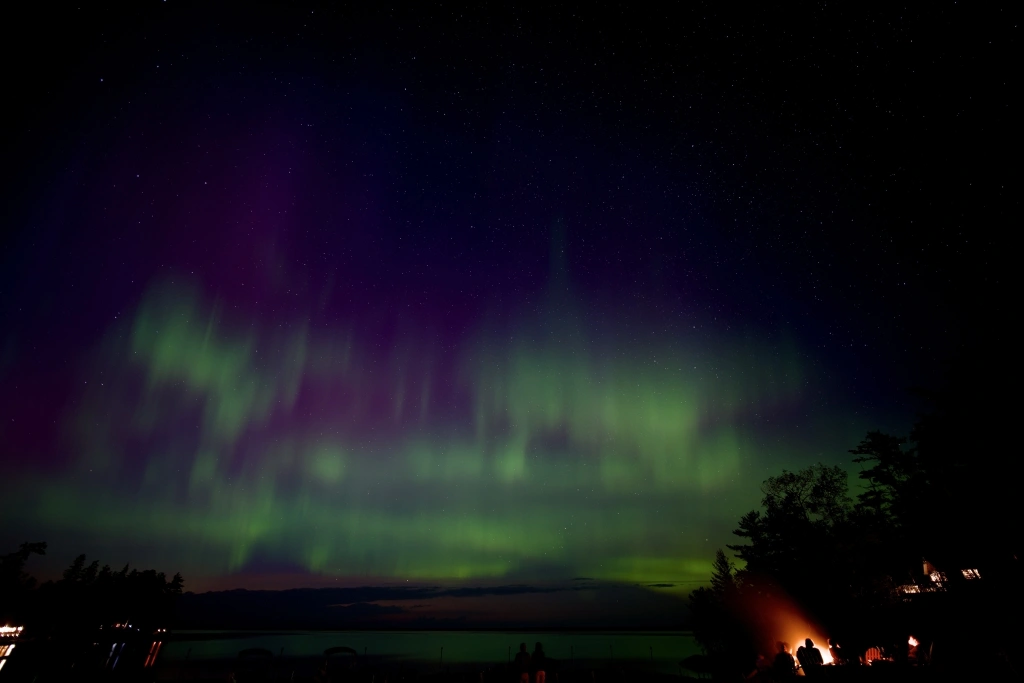
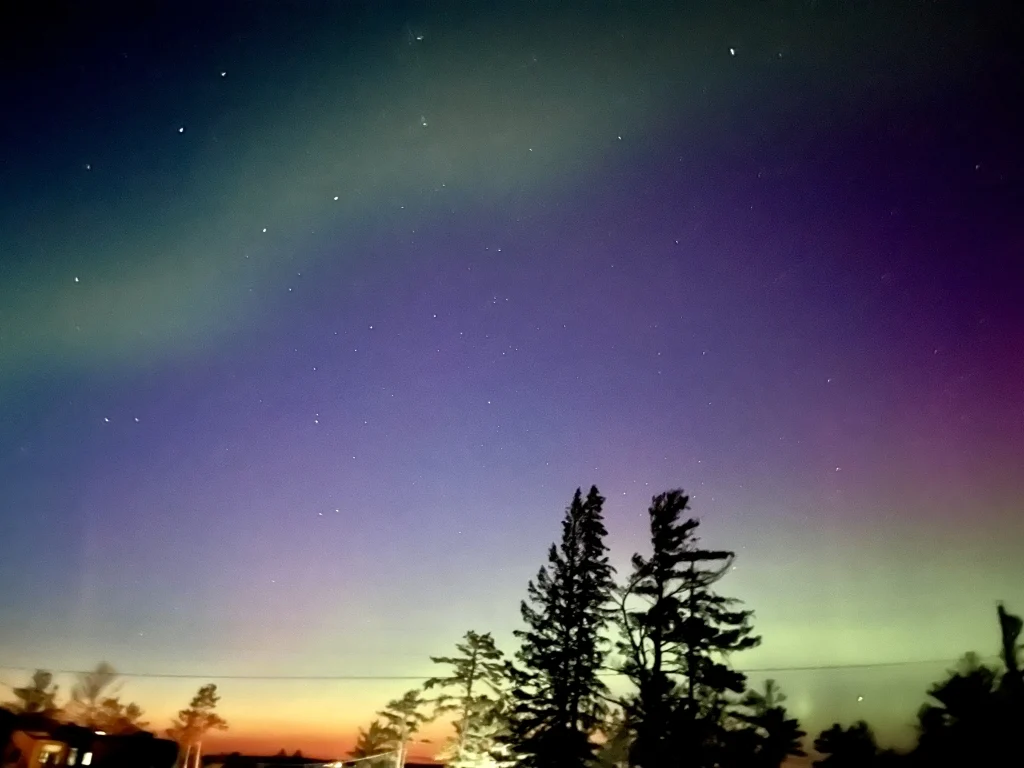
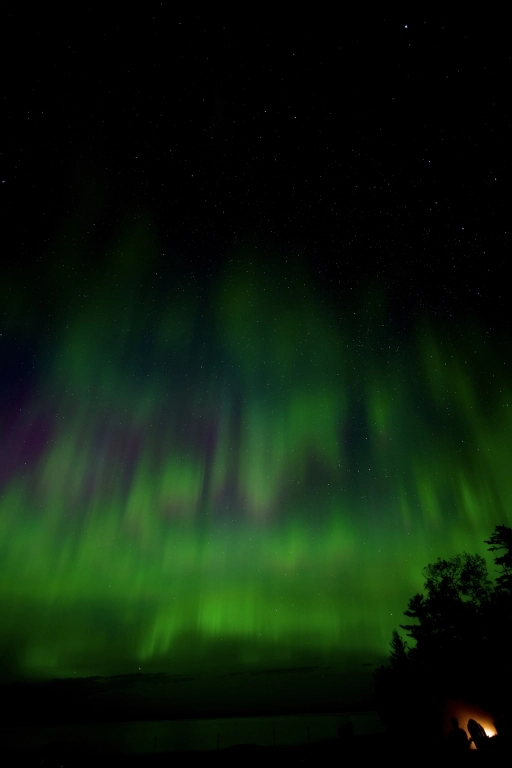
These Minnesota northern lights photos were captured by resort staff and guests at The Pines of Kabetogama.

The video above highlights northern lights photography captured by Jason at The Pines, giving visitors a real example of the kind of sky conditions and shoreline views that make this part of Lake Kabetogama so compelling when the aurora is active.
Best Time to See the Northern Lights in Minnesota
You can see the aurora in Minnesota in any season, but the easiest nights usually combine three things at once: darkness, clear skies, and elevated solar activity. In this part of northern Minnesota, late summer and early fall often give travelers a practical mix of darker nights and fewer cloudy evenings, while fall and winter provide longer hours of darkness when skies stay clear.
For trip planning, focus less on one single best month, and more on the conditions during your stay. A strong aurora forecast with cloud cover can still disappoint, while an ordinary-looking trip can produce a great show if the sky clears and activity spikes overnight.
- Solar activity: stronger geomagnetic activity improves your odds, especially in Minnesota.
- Cloud cover: clear skies matter just as much as the aurora forecast.
- Ambient light: moonlight, and light pollution can all make faint displays harder to see.
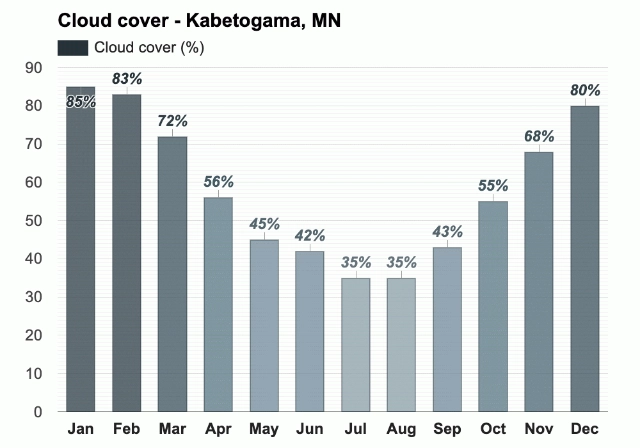
The cloud cover chart above is one reason this page emphasizes late spring, summer, and early fall so heavily. Winter can absolutely produce northern lights in Minnesota, but if your goal is to improve your practical odds during a planned trip near Lake Kabetogama, the clearer-night sky pattern from roughly May through October is worth paying attention to.
Why the Current Solar Cycle Matters
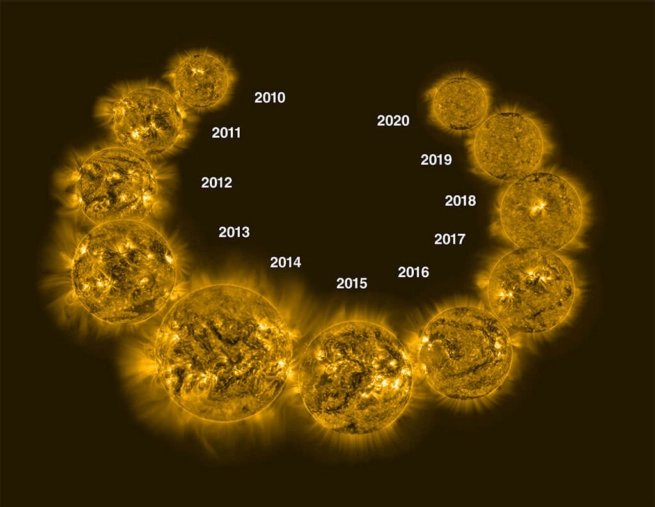
The current solar cycle is one reason the northern lights have been drawing so much attention lately. Solar Cycle 25 began in December 2019, and NOAA now treats the cycle as being in its maximum phase rather than using the older, narrower assumption that the peak would land only in July 2025.
That distinction matters for travelers planning aurora trips in 2026. NOAA’s current solar-cycle progression guidance shows that the original NASA, NOAA, and ISES panel forecast allowed the peak window to extend into March 2026, and NOAA also reported on January 30, 2026 that Solar Cycle 25 likely reached its highest daily sunspot number in more than 20 years on August 8, 2025. In plain terms, recent solar activity has been strong enough to keep aurora interest elevated, even though no one can promise a show on a specific night.
The practical takeaway is simple: this is still a very reasonable time to pay attention to aurora forecasts in northern Minnesota, but you should still make decisions based on that night’s cloud cover, darkness, and geomagnetic conditions rather than on the solar cycle alone.
How to Check the Aurora Forecast Tonight
If you want to know whether tonight is worth staying up for, use a short checklist instead of relying on one number alone.
- Start with the NOAA Space Weather Prediction Center for official space-weather updates and aurora conditions.
- Use an app such as My Aurora Forecast for alerts and quick mobile checks.
- Check the local Kabetogama forecast for clouds before you go outside: National Weather Service forecast.
- Look at the moon phase too, because a bright moon can wash out fainter aurora displays.
For most guests, the best routine is simple: check the forecast before dinner, check again later in the evening, and if conditions still look promising, step outside between about 10 PM and 2 AM. That window is often the most productive, but strong shows can start earlier or continue later.
How to Know You Are Seeing the Northern Lights
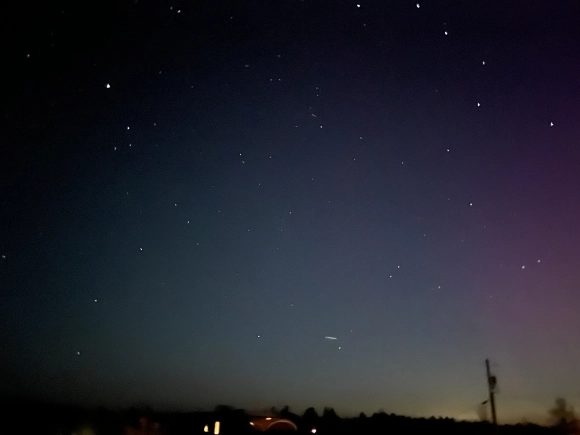
If the forecast is favorable, start by watching the northern horizon rather than staring overhead. Early-stage aurora often shows up as a low arc, pale glow, or moving curtain before brighter greens and pinks become obvious to the eye.
If you are not sure what you are seeing, use your phone camera for a quick check. Cameras often pick up color before your eyes do. Wait a few minutes, check again, and avoid bright lights while your eyes adjust.
How to Photograph the Northern Lights with a Phone
You do not need a professional camera to capture the northern lights, but you do need stability, patience, and the darkest conditions you can find. A small tripod or a way to prop your phone in place will help more than almost any setting change.
iPhone
Use Night Mode when it appears, keep the phone steady, and if your model allows a longer exposure, move it toward the maximum available time once the device is stable. Tap to focus on the brighter part of the sky and reduce exposure slightly if the image looks washed out.
Android
If your Android phone has Night Mode, Astrophotography Mode, or Pro controls, use those instead of standard photo mode. Keep the ISO moderate to high, use a slower shutter when the phone is stable, and avoid digital zoom. The goal is a sharp, steady image first, then brightness second.
For either phone type, turn off flash, hold the phone horizontally, and take several frames in a row. Aurora brightness changes quickly, so the best image is often not the first one.
What Causes the Northern Lights
The northern lights happen when charged particles from the sun interact with Earth’s magnetic field and atmosphere. Those collisions release light, which is why the aurora can appear as green, pink, purple, or white depending on altitude, atmospheric gases, and the intensity of the event.
That is also why aurora forecasting is never perfect. The sun may be active, but what matters on the ground is how that activity reaches Earth and whether the local sky over Minnesota is dark and clear enough for you to see it.
What KP, Solar Wind, Bz, and Bt Mean
Aurora forecasts can look overly technical if you do not know which signals matter. The short version is that each metric describes part of how strongly Earth is interacting with solar activity.
- Kp Index: a simple 0 to 9 scale showing geomagnetic activity. Higher numbers usually improve the odds of seeing aurora farther south.
- Solar wind speed: faster solar wind can energize geomagnetic activity.
- Solar wind density: denser solar wind can strengthen the interaction with Earth’s magnetic field.
- Bz: one of the most watched values because a southward Bz often helps aurora displays intensify.
- Bt: the overall magnetic field strength carried in the solar wind.
If you do not want to decode all of that every night, that is fine. For most travelers, the practical approach is still the same: watch NOAA, watch cloud cover, and be ready to go outside when both line up.
Quick Answers About Seeing the Northern Lights in Minnesota
What time is best tonight?
The most common viewing window is roughly 10 PM to 2 AM, but stronger events can start earlier or continue later. Check the forecast again before bed instead of assuming the earlier reading will hold.
Can you see the Northern Lights in Minneapolis?
While it is rare to see the Northern Lights in Minneapolis due to light pollution, strong solar activity can occasionally make them visible in the city. For better chances, travel to darker areas in northern Minnesota.
What direction should you look?
Start with the northern horizon. In stronger events, the lights can expand much higher overhead, but north is the first place to check from Lake Kabetogama.
How long do the lights last?
A display can fade after a few minutes or pulse on and off for hours. Aurora often comes in waves, so a quiet sky at one moment does not necessarily mean the show is over.
What is the best place in Minnesota to try?
Northern parts of the state give you the best chance, especially dark-sky areas near Voyageurs National Park, Lake Kabetogama, and the Boundary Waters.
What is good aurora etiquette?
Keep white lights and flash use to a minimum, respect quiet, stay aware of other viewers and photographers, and leave the shoreline exactly as you found it.
When can I see the Northern Lights?
The best time to see the Minnesota Northern Lights is typically between 10 PM and 2 AM. Check local aurora forecasts to determine the exact timing for tonight.
What is the best photograph exposure time for the northern lights?
For photographing the Northern Lights, use an exposure time of 5 to 25 seconds. This will capture the aurora’s movement and colors effectively.
If you want an easier place to watch without driving around late at night, browse our lakeside cabins and RV sites at The Pines of Kabetogama.


